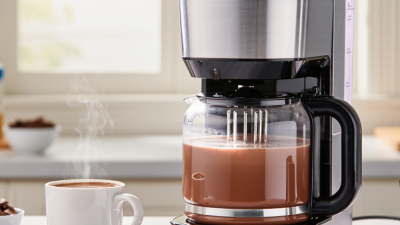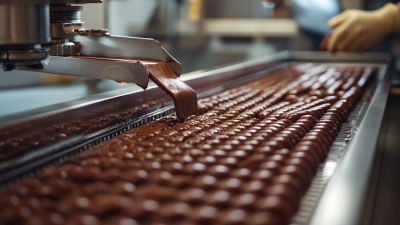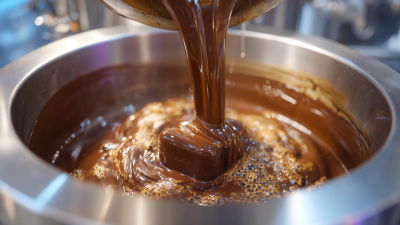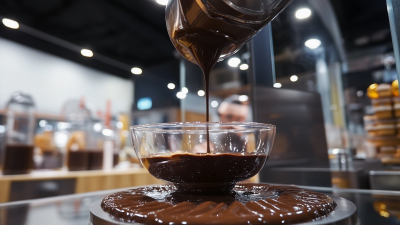
Choosing the best Hot Chocolate Maker Machine from China requires more than comparing prices or polished product photos. A reliable machine must produce smooth, evenly heated chocolate while protecting flavor, texture, and serving temperature. In a busy café, this means fewer clumps, less waste, and faster service during the morning rush.
Jean-Pierre Wybauw, an international chocolate consultant and author, often stresses the importance of control in professional chocolate work: “Good chocolate demands precise control of temperature, time, and movement.” That principle applies directly to every Hot Chocolate Maker Machine. A strong model should offer stable heating, gentle stirring, food-safe stainless steel, and simple cleaning access. These details matter when chocolate coats the bowl after several hours of use.
China has many capable manufacturers, but quality varies widely. Some machines look impressive but use weak motors, inaccurate thermostats, or difficult-to-replace parts. That weakness appears later. Usually during peak service.
This guide examines practical performance rather than marketing claims. It considers heating consistency, mixing strength, capacity, noise, energy use, warranty support, and customization options. A 5-liter machine may suit a small dessert counter, while a 12-liter unit may better support a hotel buffet or event business. However, larger is not always better. Oversized equipment can waste chocolate and cleaning time.
There is no perfect choice for every buyer. That is worth admitting. The best machine depends on recipes, daily volume, staff habits, and maintenance discipline. By comparing these factors carefully, buyers can identify a dependable Chinese Hot Chocolate Maker Machine instead of selecting one based only on a low purchase price.
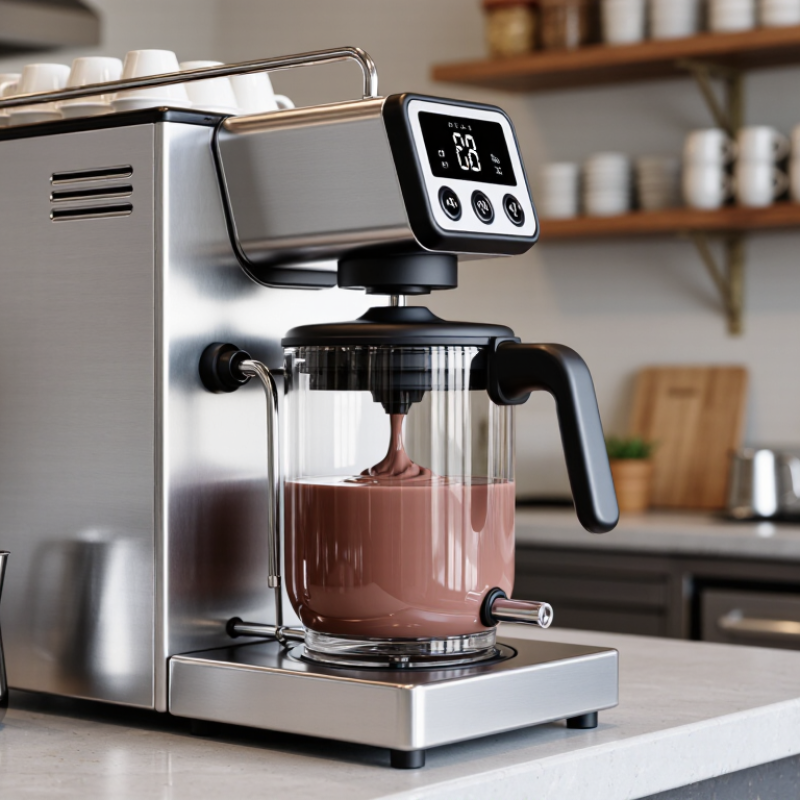
A hot chocolate maker machine is a heated mixing appliance for preparing smooth cocoa drinks. It combines chocolate, milk, water, or powder inside a temperature-controlled bowl. A motorized stirrer reduces settling, clumping, and burnt residue during service. The machine is not simply a small kettle. It manages heat and movement together.
Fortune Business Insights reported that the global hot chocolate market reached about USD 4.78 billion in 2023. Its report projects growth to approximately USD 6.15 billion by 2032. This demand supports more commercial beverage equipment, including machines manufactured in China. In practical use, operators should check heating accuracy, bowl capacity, stirring speed, and cleaning access. A 5-liter bowl may suit a café counter, while a larger vessel fits hotels or catering events. Too much capacity can waste energy during quiet hours.
Food-contact materials require careful verification. Buyers should request material certificates, electrical test records, and temperature-control specifications before ordering. A reliable machine should maintain a stable serving temperature without scorching the chocolate. Many models appear similar online, but pump quality and gearbox durability can differ greatly. This is the difficult part. Product photos cannot reveal noise, cleaning effort, or performance after months of daily use. Testing a sample batch with real milk and chocolate provides stronger evidence than a catalogue promise.
A hot chocolate maker machine heats and mixes chocolate beverages, helping maintain an even temperature and smooth consistency during preparation or service. The best type depends on batch size, serving volume, cleaning needs, and whether the machine is intended for home or commercial use. The capacities and characteristics below are typical examples; specifications vary by model.
| Machine Type | Typical Capacity | How It Works | Best Suited For | Useful Features | Things to Check |
|---|---|---|---|---|---|
| Commercial hot chocolate dispenser | Commonly around 5–10 L per bowl; larger options are available | Heats the drink and continuously stirs or agitates it to help keep it mixed. | Cafés, buffets, hotels, and other locations serving drinks throughout the day | Adjustable temperature, tap dispensing, visible bowl, and removable parts on some models | Confirm the minimum fill level, cleaning procedure, food-contact materials, and whether the machine suits the recipe being used. |
| Countertop hot chocolate mixer | Usually designed for individual servings or small batches | Mixes and warms milk or another liquid with chocolate or cocoa ingredients in a jug or vessel. | Homes, small offices, and low-volume drink stations | Compact footprint, simple controls, and a vessel that may be removable for cleaning | Check serving capacity, permitted ingredients, cleaning instructions, and whether it can prepare more than one serving per cycle. |
| Induction or heated chocolate pot with mixer | Varies; typically intended for small to medium batches | Uses a heated vessel and a mixing mechanism to warm and blend the drink. | Small cafés, dessert counters, and kitchens preparing batches to order | May provide more direct control over batch preparation and ingredient mixing | Check heating compatibility, stirring performance, batch size, and whether the vessel and mixer can be cleaned separately. |
| Hot beverage vending machine | Dispenses individual cups; total capacity depends on ingredient and water storage | Usually mixes a cocoa or chocolate-based ingredient with heated water or milk during dispensing. | Self-service areas, workplaces, and locations needing unattended service | Portion control, multiple drink options, and automated dispensing | Review ingredient compatibility, refill frequency, cleaning access, cup-size options, and local electrical requirements. |
| Practical selection: For continuous service, a heated dispenser with stirring is often the most suitable category. For home use or occasional preparation, a smaller countertop mixer is generally more practical. Before purchasing a machine made in China, compare the actual model’s capacity, voltage and plug configuration, food-contact material documentation, spare-parts availability, warranty terms, and cleaning requirements. No single machine is best for every use case. | |||||